Special Recommend information on A H1N1 (swine flu)
As it is known to all, currently we human being are all faced with a big enemy-A/H1N1 flu (swine flu) which has been threatening our life. Now the situation is worsening. As health and medical to AH1N1organ, we shoulder more responsibility to handle outbreak of this emergency.
In TCM, A/H1N1 belongs to epidemic febrile disease of TCM which is the same as human avian influenza and SARS and similar to A/H1N1 flu syndrome differentiation and treatment of TCM prevention and cure. It is advocated “dispelling wind, reducing fever and dissipating dampness in clinical.
TCM center will provide latest Special Report Globally on the A/H1N1 flu; and you still can find the Symptoms and Prevention about A/H1N1 flu ; further more, TCM prevention for swine flu provides latest global news; Chinese medicine prevention for A/H1N1 flu ; Chinese herbal medicine and so on.
Routine 4
1. (Continue from the previous movement as in Fig. 34) Lower the hands with the palms facing up, and point the fingers at each other. Look forward and down [Fig. 37] .
2. Slowly straighten the knees to stand up. Raise the hands to chest level. Look forward and down [Fig. 38] .
3. Lower the elbows, and withdraw them to the flanks. Raise the hands to shoulder height, with the fingers pointing up [Figs. 39 and 39A] .
Pull in the shoulder blades towards the spine by spreading the shoulders and the chest. Tilt the head back a little while pulling in the neck. Look forward and up [Figs. 40, 40A and 40B] .
4. Adopt a slight squatting position, at the same time relaxing the shoulders and making the neck straight. Slowly push the palms forward while pronouncing "SI." Keep the eyes fixed straight ahead [Figs. 41 and 42] .
5. Turn the wrists in an outward circle to face the palms inward, with the fingers pointing to each other and shoulder-width apart [Figs. 43 and 44] .
6. Slowly straighten the knees to stand up, at the same time bending the elbows and slowly withdrawing the hands to a position about 10 cm in front of the chest, with the palms up and fingers pointing to each other. Look forward and down [Fig.45] .
7. Lower the elbows, and make them touch the ribs. Raise the hands to shoulder height, with the palms facing each other and the fingers pointing up [Figs. 46 and 46A] . Pull in the shoulder blades towards the spine. Spread the shoulders and chest. Pull in the neck while tilting the head back a little, and look forward and up [Figs. 47, 47A and 47B] .
8. Adopt a slight squatting position, at the same time relaxing the shoulders and keeping the neck straight. Slowly extend the hands forward while pronouncing "SI," palms facing forward. Keep the eyes fixed straight ahead [Figs. 48 and 49] .
Repeat movements 5-8 four times, pronouncing "SI" a total of six times.
Key points
The pronunciation of "SI" is assisted by the teeth. In the process of exhalation and pronunciation, make the front upper and lower teeth parallel, with a narrow gap in between. The tongue tip touches lightly the lower teeth. Exhale the air from between the teeth [Fig. 50] .
Exhale and pronounce "SI" while pushing the hands out. Turn the wrists outward, with the fingers pointing to each other. Inhale through the nose when withdrawing the hands.
Common mistakes
Complete the acts of raising the palms, spreading the shoulders and the chest, tilting the head back a little to pull in the neck at the same point in time.
Moving the head backward too much when pulling in the neck.
Corrections
Raise the hands to shoulder level; then spread the shoulders and chest; and then tilt the head back a little to pull in the neck. These movements should be done step by step.
When tilting the head back and pulling in the neck, pull in the chin slightly.
Functions and effects
The theory of traditional Chinese medicine holds that the lungs will respond when the sound "SI" is pronounced, and that the exhalation and the pronunciation of "SI" help to rid the lungs of turbid Qi and regulate its function.
Spreading the shoulders and chest, and pulling in the neck by somewhat tilting the head back help to fill the lung cavities with flesh air. Contracting the lower abdomen raises internal energy from Dantian (about two inches below the navel) upward to the chest. The convergence in the chest of fresh air and energy helps to improve the breathing, thus invigorating the refreshment of Qi and blood and air exchange in the lungs.
Raising the hands to shoulder height, relaxing the shoulders and pushing the hands forward stimulate the points around the shoulders, effectively reducing muscle and joint fatigue at the shoulders, neck and back, and preventing cervical problems, periarthritis and back muscle fatigue.
2009年5月14日星期四

2009年5月12日星期二
HE Exercise
Special Recommend information on A H1N1 (swine flu)
As it is known to all, currently we human being are all faced with a big enemy-A/H1N1 flu (swine flu) which has been threatening our life. Now the situation is worsening. As health and medical to AH1N1organ, we shoulder more responsibility to handle outbreak of this emergency.
In TCM, A/H1N1 belongs to epidemic febrile disease of TCM which is the same as human avian influenza and SARS and similar to A/H1N1 flu syndrome differentiation and treatment of TCM prevention and cure. It is advocated “dispelling wind, reducing fever and dissipating dampness in clinical.
TCM center will provide latest Special Report Globally on the A/H1N1 flu; and you still can find the Symptoms and Prevention about A/H1N1 flu ; further more, TCM prevention for swine flu provides latest global news; Chinese medicine prevention for A/H1N1 flu ; Chinese herbal medicine and so on.
Routine 2
1. (Continue from the previous routine as shown by Fig. 15) Inhale and at the same time slightly lift the hands with the little fingers touching the sides of the waist and the fingers tilted forward and down. Look straight ahead [Fig. 17] . Bend the knees to squat down, lower the hands downward for about 45 degrees, and move forward with the arms slightly bent and the eyes fixed on the hands [Figs. 18 and 18A] .
2. Slightly bend the elbows and withdraw the hands. The little fingers should be touching each other, and the palms should be up in a hollow lifting position level with the navel. Fix the eyes on the hands [Figs. 19 and 19A] .
3. Slowly straighten the knees to stand up, bend the elbows and lift the hands to chest level, with the palms facing the chest and the middle fingers level with the chin. Look forward and down [Figs. 20 and 20A] .
4. Lift the elbows outward and level with the shoulders. Turn the palms down, with the fingers pointing down and the backs of the hands touching each other [Figs. 21 and 21A] . Lower the hands and look forward and down [Figs. 22 and 22A] . Exhale to pronounce "HE" while lowering the hands.
5. Bend the knees to slightly squat down while moving the palms down to a position level with the navel. Turn the palms down and out, and push them slowly out to form a circle. Look forward and down [Fig. 23] .
6. Turn the palms inward and then up, and withdraw the elbows inward to form a hollow lifting position in front of the abdomen. Look at the palms [Figs. 24, 25 and 26] .
7. Slowly straighten the knees to stand up. Bend the elbows to lift the hands to chest level, with the palms facing the chest and the middle fingers level with the chin. Look forward and down [Figs. 27 and 27A] .
8. Lift the elbows outward and up to shoulder level. Turn the palms down, with the fingers pointing down and the backs of the hands touching each other [Figs. 28 and 28A] . Lower the hands, and look forward and down [Figs. 29 and 29A] . Exhale to pronounce "HE" while lowering the hands. repeat movements 5-8 four times, pronouncing "HE" six times in the process.
Key points
The pronunciation of "HE" is assisted by the tongue. When exhaling and pronouncing the sound, touch the upper back teeth lightly with the sides of the tongue and exhale the air from between the tongue and the upper jaw [Fig. 30] .
Inhale through the nose when lifting the hands, and exhale anal pronounce "HE" when moving the hands down and pushing them out.
Common mistakes
Thrusting the chest out and the head up when lifting the hands and bending the elbows.
Corrections
Keep the head down and pull in the chest when bending the elbows.
Functions and effects
The theory of traditional Chinese medicine holds that the heart will respond when the sound "HE" is pronounced, and that exhalation while pronouncing "HE" will help to rid the heart of turbid Qi and regulate its function.
The raising and lowering of the hands help to promote the functional activities of the kidneys, which correspond to water according to traditional Chinese medicine. The water then will help to expel fire from the heart, which will go down to warm the water in the kidneys. Such an interaction regulates and invigorates the functions of both the heart and kidneys.
The gentle and continuous exercising of the hands, shoulders, elbows and wrists and related joints improves their flexibility and coordination, thus helping to prevent degeneration of the joints of the upper body in aged and the middle-aged people.
As it is known to all, currently we human being are all faced with a big enemy-A/H1N1 flu (swine flu) which has been threatening our life. Now the situation is worsening. As health and medical to AH1N1organ, we shoulder more responsibility to handle outbreak of this emergency.
In TCM, A/H1N1 belongs to epidemic febrile disease of TCM which is the same as human avian influenza and SARS and similar to A/H1N1 flu syndrome differentiation and treatment of TCM prevention and cure. It is advocated “dispelling wind, reducing fever and dissipating dampness in clinical.
TCM center will provide latest Special Report Globally on the A/H1N1 flu; and you still can find the Symptoms and Prevention about A/H1N1 flu ; further more, TCM prevention for swine flu provides latest global news; Chinese medicine prevention for A/H1N1 flu ; Chinese herbal medicine and so on.
Routine 2
1. (Continue from the previous routine as shown by Fig. 15) Inhale and at the same time slightly lift the hands with the little fingers touching the sides of the waist and the fingers tilted forward and down. Look straight ahead [Fig. 17] . Bend the knees to squat down, lower the hands downward for about 45 degrees, and move forward with the arms slightly bent and the eyes fixed on the hands [Figs. 18 and 18A] .
2. Slightly bend the elbows and withdraw the hands. The little fingers should be touching each other, and the palms should be up in a hollow lifting position level with the navel. Fix the eyes on the hands [Figs. 19 and 19A] .
3. Slowly straighten the knees to stand up, bend the elbows and lift the hands to chest level, with the palms facing the chest and the middle fingers level with the chin. Look forward and down [Figs. 20 and 20A] .
4. Lift the elbows outward and level with the shoulders. Turn the palms down, with the fingers pointing down and the backs of the hands touching each other [Figs. 21 and 21A] . Lower the hands and look forward and down [Figs. 22 and 22A] . Exhale to pronounce "HE" while lowering the hands.
5. Bend the knees to slightly squat down while moving the palms down to a position level with the navel. Turn the palms down and out, and push them slowly out to form a circle. Look forward and down [Fig. 23] .
6. Turn the palms inward and then up, and withdraw the elbows inward to form a hollow lifting position in front of the abdomen. Look at the palms [Figs. 24, 25 and 26] .
7. Slowly straighten the knees to stand up. Bend the elbows to lift the hands to chest level, with the palms facing the chest and the middle fingers level with the chin. Look forward and down [Figs. 27 and 27A] .
8. Lift the elbows outward and up to shoulder level. Turn the palms down, with the fingers pointing down and the backs of the hands touching each other [Figs. 28 and 28A] . Lower the hands, and look forward and down [Figs. 29 and 29A] . Exhale to pronounce "HE" while lowering the hands. repeat movements 5-8 four times, pronouncing "HE" six times in the process.
Key points
The pronunciation of "HE" is assisted by the tongue. When exhaling and pronouncing the sound, touch the upper back teeth lightly with the sides of the tongue and exhale the air from between the tongue and the upper jaw [Fig. 30] .
Inhale through the nose when lifting the hands, and exhale anal pronounce "HE" when moving the hands down and pushing them out.
Common mistakes
Thrusting the chest out and the head up when lifting the hands and bending the elbows.
Corrections
Keep the head down and pull in the chest when bending the elbows.
Functions and effects
The theory of traditional Chinese medicine holds that the heart will respond when the sound "HE" is pronounced, and that exhalation while pronouncing "HE" will help to rid the heart of turbid Qi and regulate its function.
The raising and lowering of the hands help to promote the functional activities of the kidneys, which correspond to water according to traditional Chinese medicine. The water then will help to expel fire from the heart, which will go down to warm the water in the kidneys. Such an interaction regulates and invigorates the functions of both the heart and kidneys.
The gentle and continuous exercising of the hands, shoulders, elbows and wrists and related joints improves their flexibility and coordination, thus helping to prevent degeneration of the joints of the upper body in aged and the middle-aged people.
2009年5月10日星期日
Ready Position and starting position two
Special Recommend information on A H1N1 (swine flu)
As it is known to all, currently we human being are all faced with a big enemy-A/H1N1 flu (swine flu) which has been threatening our life. Now the situation is worsening. As health and medical to AH1N1organ, we shoulder more responsibility to handle outbreak of this emergency.
In TCM, A/H1N1 belongs to epidemic febrile disease of TCM which is the same as human avian influenza and SARS and similar to A/H1N1 flu syndrome differentiation and treatment of TCM prevention and cure. It is advocated “dispelling wind, reducing fever and dissipating dampness in clinical.
TCM center will provide latest Special Report Globally on the A/H1N1 flu; and you still can find the Symptoms and Prevention about A/H1N1 flu ; further more, TCM prevention for swine flu provides latest global news; Chinese medicine prevention for A/H1N1 flu ; Chinese herbal medicine and so on.
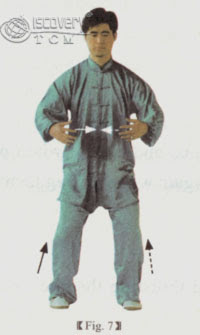
Turn the palms inward [Figs. 7 and 7A] .

As it is known to all, currently we human being are all faced with a big enemy-A/H1N1 flu (swine flu) which has been threatening our life. Now the situation is worsening. As health and medical to AH1N1organ, we shoulder more responsibility to handle outbreak of this emergency.
In TCM, A/H1N1 belongs to epidemic febrile disease of TCM which is the same as human avian influenza and SARS and similar to A/H1N1 flu syndrome differentiation and treatment of TCM prevention and cure. It is advocated “dispelling wind, reducing fever and dissipating dampness in clinical.
TCM center will provide latest Special Report Globally on the A/H1N1 flu; and you still can find the Symptoms and Prevention about A/H1N1 flu ; further more, TCM prevention for swine flu provides latest global news; Chinese medicine prevention for A/H1N1 flu ; Chinese herbal medicine and so on.
Turn the palms inward [Figs. 7 and 7A] .

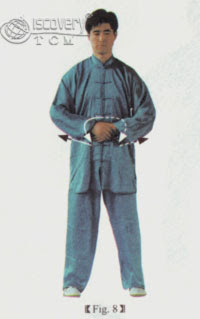
Slowly raise the buttocks. Retract the hands and cross their webs between the thumb and the index finger on the navel. Breathe naturally until in a clam frame of mind, while looking forward and down [Figs. 8 and 8A] .

Key points
[] Breathe through the noseInhale while lifting the palms, and exhale when pressing them down and forward. Inhale again when pulling them in.
Common mistakes
[] Tilting the elbows back and thrusting the chest out while lifting the palms.
[] Thrusting the chest and abdomen out when pushing the palms out.
[] Contracting the elbows and pressing the hands tightly on the navel.
Corrections
[] Move the elbows forward to spread the shoulders and pull in the chest when lifting the palms.
[] Move the body weight backward and stretch the palms forward when pushing the palms out in front of the abdomen.
[] Move the elbows slightly out, and keep the armpits open.
Functions and effects
[] Lifting, pressing down, pushing out and pulling in the hands while rhythmically bending and stretching the lower limbs, accompanied by proper breathing helps to regulate the circulation of inner energy. While vitalizing the blood and energy circulation, it also gets the mind and body ready for the next part of the routine.
[] The rhythmic and gentle movements of the waist and knee joints help to improve and enhance the functions of these joints in middle-aged and elderly people.
2009年5月6日星期三
Characteristics of Liu Zi Jue
Special Recommend information on A H1N1 (swine flu)
As it is known to all, currently we human being are all faced with a big enemy-A/H1N1 flu (swine flu) which has been threatening our life. Now the situation is worsening. As health and medical organ, we shoulder more responsibility to handle outbreak of this emergency.
In TCM, A/H1N1 belongs to epidemic febrile disease of TCM which is the same as human avian influenza and SARS and similar to A/H1N1 flu syndrome differentiation and treatment of TCM prevention and cure. It is advocated “dispelling wind, reducing fever and dissipating dampness in clinical.
TCM center will provide latest Special Report Globally on the A/H1N1 flu; and you still can find the Symptoms and Prevention about A/H1N1 flu ; further more, TCM prevention for swine flu provides latest global news; Chinese medicine prevention for A/H1N1 flu ; Chinese herbal medicine and so on.
Mouth Forms Required for Pronunciation
Liu Zi Jue features a unique set of special mouth forms to regulate and control the rise and fall of Qi (vital energy) inside the body and related inhalation and exhalation. By means of the breathing and pronunciation methods for XU, HE, HU, SI, CHUI and XI, Liu Zi Jue is unique in balancing the energy and the functions of the inner organs. The authors have tried to standardize the mouth forms and related pronunciation methods. Such efforts have resulted in a complete system with independent and interactive elements.
Combining Breathing and Movements with Cultivation of Energy
With the focus on breathing and pronouncing the required sounds, Liu Zi Jue features a scientific guideline which helps to regulate the internal organs and enhance the muscles and bones for general health and fitness. Ge Hong of the Eastern Jin Dynasty (317-420) described such effects in a book: "Those who know the real meaning of breathing can enjoy the proper internal circulation of energy vital for the health, and those who know the ways to apply strength and the ways to relax can expect a long life."
Dynamics Infused in Calmness and Flowing Grace
With clear Qigong characteristics, Liu Zi Jue boasts a unique charm of calmness and gentleness, with movements as extended, slow, gentle and graceful as flowing water and clouds. The mysterious and palpable effects are as if one is infused with Qi, leading to a graceful integrity of the body, mind and spirit. The pronunciation is required to be even and extended, and the movements relaxed and slow. Regulated breathing is even required during the inert posture. All this brings one to a calm yet dynamic state, which improves the circulation of vital energy and the functions of the inner organs.
Simple, Reliable and Effective
The exercises are based on the pronunciation of the six sounds during exhalation, accompanied with typical and simple movements. The nine movements, including the ones done in the preparatory and concluding posture, are all easy to learn and practice. The practice requires the mind to follow the circulation of Qi which goes with every stage of the movement, to cultivate the inner energy. Without complicated spiritual striving or difficult, intensive movements, the exercises are safe and reliable, and especially suitable the aged and the weak.
As it is known to all, currently we human being are all faced with a big enemy-A/H1N1 flu (swine flu) which has been threatening our life. Now the situation is worsening. As health and medical organ, we shoulder more responsibility to handle outbreak of this emergency.
In TCM, A/H1N1 belongs to epidemic febrile disease of TCM which is the same as human avian influenza and SARS and similar to A/H1N1 flu syndrome differentiation and treatment of TCM prevention and cure. It is advocated “dispelling wind, reducing fever and dissipating dampness in clinical.
TCM center will provide latest Special Report Globally on the A/H1N1 flu; and you still can find the Symptoms and Prevention about A/H1N1 flu ; further more, TCM prevention for swine flu provides latest global news; Chinese medicine prevention for A/H1N1 flu ; Chinese herbal medicine and so on.
Mouth Forms Required for Pronunciation
Liu Zi Jue features a unique set of special mouth forms to regulate and control the rise and fall of Qi (vital energy) inside the body and related inhalation and exhalation. By means of the breathing and pronunciation methods for XU, HE, HU, SI, CHUI and XI, Liu Zi Jue is unique in balancing the energy and the functions of the inner organs. The authors have tried to standardize the mouth forms and related pronunciation methods. Such efforts have resulted in a complete system with independent and interactive elements.
Combining Breathing and Movements with Cultivation of Energy
With the focus on breathing and pronouncing the required sounds, Liu Zi Jue features a scientific guideline which helps to regulate the internal organs and enhance the muscles and bones for general health and fitness. Ge Hong of the Eastern Jin Dynasty (317-420) described such effects in a book: "Those who know the real meaning of breathing can enjoy the proper internal circulation of energy vital for the health, and those who know the ways to apply strength and the ways to relax can expect a long life."
Dynamics Infused in Calmness and Flowing Grace
With clear Qigong characteristics, Liu Zi Jue boasts a unique charm of calmness and gentleness, with movements as extended, slow, gentle and graceful as flowing water and clouds. The mysterious and palpable effects are as if one is infused with Qi, leading to a graceful integrity of the body, mind and spirit. The pronunciation is required to be even and extended, and the movements relaxed and slow. Regulated breathing is even required during the inert posture. All this brings one to a calm yet dynamic state, which improves the circulation of vital energy and the functions of the inner organs.
Simple, Reliable and Effective
The exercises are based on the pronunciation of the six sounds during exhalation, accompanied with typical and simple movements. The nine movements, including the ones done in the preparatory and concluding posture, are all easy to learn and practice. The practice requires the mind to follow the circulation of Qi which goes with every stage of the movement, to cultivate the inner energy. Without complicated spiritual striving or difficult, intensive movements, the exercises are safe and reliable, and especially suitable the aged and the weak.
订阅:
博文 (Atom)